Spring @Transactional原理
一 简介
@Transactional是spring中声明式事务管理的注解配置方式,相信这个注解的作用大家都很清楚。@Transactional注解可以帮助我们把事务开启、提交或者回滚的操作,通过aop的方式进行管理。
通过@Transactional注解就能让spring为我们管理事务,免去了重复的事务管理逻辑,减少对业务代码的侵入,使我们开发人员能够专注于业务层面开发。
Spring事务管理采用切面(AOP)的核心原因在于实现声明式事务控制,将事务逻辑与业务逻辑解耦,从而提升代码的可维护性、灵活性和复用性
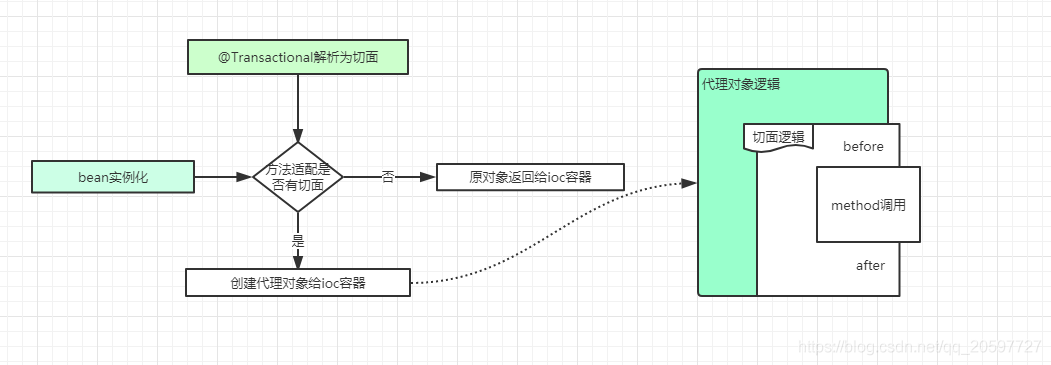
二 @Transactional
打开TransactionAutoConfiguration自动配置类可以看到一个比较重要的注解@EnableTransactionManagement用于开启事务管理功能,@EnableTransactionManagement注解又导入了AutoProxyRegistrar和ProxyTransactionManagementConfiguration。
2.1 事务配置
首先是@Transactional,作用是定义代理植入点。我们知道代理对象创建的通过BeanPostProcessor的实现类AnnotationAwareAspectJAutoProxyCreator的postProcessAfterInstantiation方法来实现个,如果需要进行代理,那么在这个方法就会返回一个代理对象给容器,同时判断植入点也是在这个方法中。
在配置好注解驱动方式的事务管理之后,spring会在ioc容器创建一个BeanFactoryTransactionAttributeSourceAdvisor实例,这个实例可以看作是一个切点,在判断一个bean在初始化过程中是否需要创建代理对象,都需要验证一次BeanFactoryTransactionAttributeSourceAdvisor是否是适用这个bean的切点。如果是,就需要创建代理对象,并且把BeanFactoryTransactionAttributeSourceAdvisor实例注入到代理对象中。
我们知道在AopUtils#findAdvisorsThatCanApply中判断切面是否适用当前bean,最终调用SpringTransactionAnnotationParser#parseTransactionAnnotation(java.lang.reflect.AnnotatedElement)
@Override
public TransactionAttribute parseTransactionAnnotation(AnnotatedElement ae) {
    //这里就是分析Method是否被@Transactional注解标注,有的话,不用说BeanFactoryTransactionAttributeSourceAdvisor适配当前bean,进行代理,并且注入切点
    //BeanFactoryTransactionAttributeSourceAdvisor
   AnnotationAttributes attributes = AnnotatedElementUtils.getMergedAnnotationAttributes(ae, Transactional.class);
   if (attributes != null) {
      return parseTransactionAnnotation(attributes);
   }
   else {
      return null;
   }
}
上面就是判断是否需要根据@Transactional进行代理对象创建的判断过程。@Transactional的作用一个就是标识方法需要被代理,一个就是携带事务管理需要的一些属性信息。
2.2 事务流程
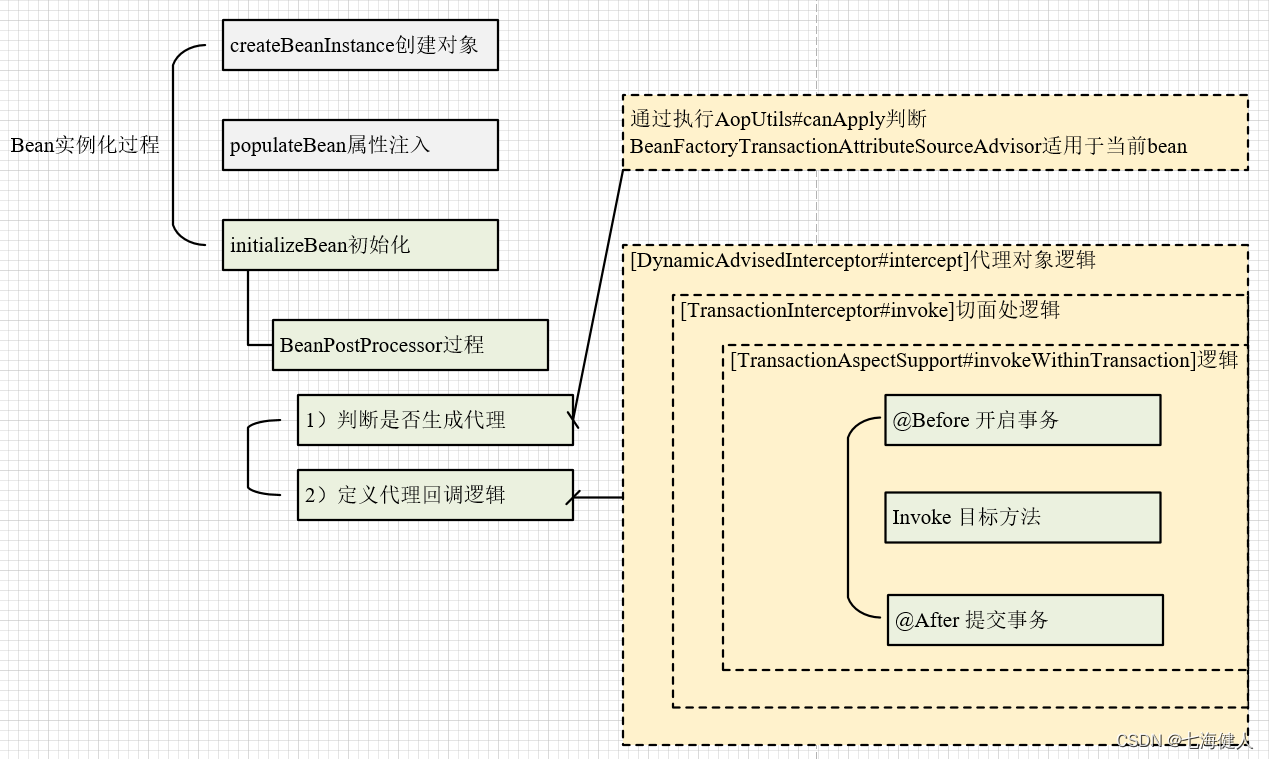
2.3 @Transactional注解作用域
@Transactional可以作用在接口、类、类方法;
- 作用于类:当把@Transactional 注解放在类上时,表示所有该类的public方法都配置相同的事务属性信息,会导致事务控制的粒度太大,注解参数无法根据每个类方法的实际需求设置;因此,一般@Transactional注解都会直接添加的需要的方法上
- 作用于方法:当类配置了@Transactional,方法也配置了@Transactional,方法的事务会覆盖类的事务配置信息
- 作用于接口:不推荐这种使用方法,因为一旦标注在Interface上并且配置了Spring AOP 使用CGLib动态代理,将会导致@Transactional注解失效
2.4 事务回滚
@Transactional默认只能回滚RuntimeException和RuntimeException下面的子类抛出的异常,不能回滚Exception异常;如果需要支持回滚Exception异常,需要显示的指明,如@Transactional(rollbackFor = Exception.class)
2.5 失效场景
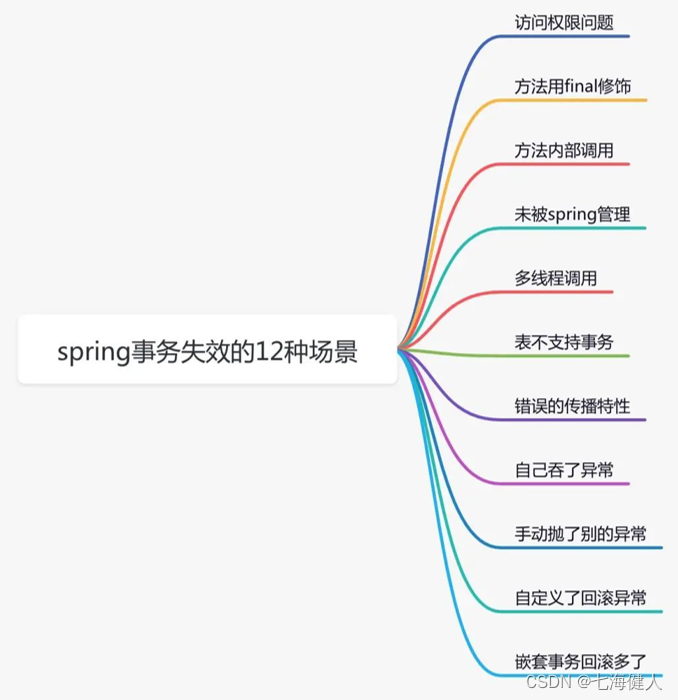
参考"事务失效场景"
- @Transactional注解未打在public方法上
Java的访问权限主要有四种:private、default、protected、public;如果事务方法定义了错误的访问权限(非public方法),会导致事务失效。 - 目标方法用final修饰
某个方法不想被子类重写,可以将该方法定义成final的;如果将事务方法定义成final,会导致事务失效
原因:Spring事务基于Spring AOP,通过JDK动态代理或者CGlib代理,在代理类中实现的事务功能;但如果某个方法用final修饰了,那么在它的代理类中,就无法重写该方法;同样,static修饰的方法,同样无法通过动态代理,变成事务方法 - 同一个类中的方法直接内部调用
方法被事务管理是因为Apring AOP为其生成代理了对象,但是直接this调用同类方法,调用的是目标类对象的方法,而非代理类方法,因此,在同类中的方法直接内部调用,会导致事务失效。 - 事务方法所在的类未被Spring管理
- 多线程调用
如果两个方法不在同一个线程中,获取到的数据库连接不一样,从而是两个不同的事务 - 存储引擎不支持事务
- 未开启事务
2.6 事务不回滚
- 错误的传播特性
其实,我们在使用@Transactional注解时,是可以指定propagation参数的。
该参数的作用是指定事务的传播特性,spring目前支持7种传播特性:
- REQUIRED 如果当前上下文中存在事务,那么加入该事务,如果不存在事务,创建一个事务,这是默认的传播属性值。
- SUPPORTS 如果当前上下文存在事务,则支持事务加入事务,如果不存在事务,则使用非事务的方式执行。
- MANDATORY 如果当前上下文中存在事务,否则抛出异常。
- REQUIRES_NEW 每次都会新建一个事务,并且同时将上下文中的事务挂起,执行当前新建事务完成以后,上下文事务恢复再执行。
- NOT_SUPPORTED 如果当前上下文中存在事务,则挂起当前事务,然后新的方法在没有事务的环境中执行。
- NEVER 如果当前上下文中存在事务,则抛出异常,否则在无事务环境上执行代码。
- NESTED 如果当前上下文中存在事务,则嵌套事务执行,如果不存在事务,则新建事务。
- 自己吞了异常
这种情况下spring事务当然不会回滚,因为开发者自己捕获了异常,又没有手动抛出,换句话说就是把异常吞掉了。
如果想要spring事务能够正常回滚,必须抛出它能够处理的异常。如果没有抛异常,则spring认为程序是正常的。
- 手动抛了别的异常
- 自定义了回滚异常
- 嵌套事务回滚多了
三 源码分析
aop最终的代理对象的代理方法是
DynamicAdvisedInterceptor#intercept
@Override
public Object intercept(Object proxy, Method method, Object[] args, MethodProxy methodProxy) throws Throwable {
   Object oldProxy = null;
   boolean setProxyContext = false;
   Class<?> targetClass = null;
   Object target = null;
   try {
      if (this.advised.exposeProxy) {
         // Make invocation available if necessary.
         oldProxy = AopContext.setCurrentProxy(proxy);
         setProxyContext = true;
      }
      // May be null. Get as late as possible to minimize the time we
      // "own" the target, in case it comes from a pool...
      target = getTarget();
      if (target != null) {
         targetClass = target.getClass();
      }
       //follow
      List<Object> chain = this.advised.getInterceptorsAndDynamicInterceptionAdvice(method, targetClass);
      Object retVal;
      // Check whether we only have one InvokerInterceptor: that is,
      // no real advice, but just reflective invocation of the target.
      if (chain.isEmpty() && Modifier.isPublic(method.getModifiers())) {
         // We can skip creating a MethodInvocation: just invoke the target directly.
         // Note that the final invoker must be an InvokerInterceptor, so we know
         // it does nothing but a reflective operation on the target, and no hot
         // swapping or fancy proxying.
         Object[] argsToUse = AopProxyUtils.adaptArgumentsIfNecessary(method, args);
         retVal = methodProxy.invoke(target, argsToUse);
      }
      else {
         // We need to create a method invocation...
         retVal = new CglibMethodInvocation(proxy, target, method, args, targetClass, chain, methodProxy).proceed();
      }
      retVal = processReturnType(proxy, target, method, retVal);
      return retVal;
   }
   finally {
      if (target != null) {
         releaseTarget(target);
      }
      if (setProxyContext) {
         // Restore old proxy.
         AopContext.setCurrentProxy(oldProxy);
      }
   }
}
getInterceptorsAndDynamicInterceptionAdvice返回的是TransactionInterceptor,发现最终是调用TransactionInterceptor#invoke方法,并且把CglibMethodInvocation注入到invoke方法中,从上面可以看到CglibMethodInvocation是包装了目标对象的方法调用的所有必须信息,因此,在TransactionInterceptor#invoke里面也是可以调用目标方法的,并且还可以实现类似@Around的逻辑,在目标方法调用前后继续注入一些其他逻辑,比如事务管理逻辑。
2.3 TransactionInterceptor–最终事务管理者
@Override
public Object invoke(final MethodInvocation invocation) throws Throwable {
 // Work out the target class: may be {@code null}.
 // The TransactionAttributeSource should be passed the target class
 // as well as the method, which may be from an interface.
 Class<?> targetClass = (invocation.getThis() != null ? AopUtils.getTargetClass(invocation.getThis()) : null);

 // Adapt to TransactionAspectSupport's invokeWithinTransaction...
 return invokeWithinTransaction(invocation.getMethod(), targetClass, new InvocationCallback() {
  @Override
  public Object proceedWithInvocation() throws Throwable {
   return invocation.proceed();
  }
 });
}
protected Object invokeWithinTransaction(Method method, Class<?> targetClass, final InvocationCallback invocation)
      throws Throwable {

   // If the transaction attribute is null, the method is non-transactional.
   final TransactionAttribute txAttr = getTransactionAttributeSource().getTransactionAttribute(method, targetClass);
   final PlatformTransactionManager tm = determineTransactionManager(txAttr);
   final String joinpointIdentification = methodIdentification(method, targetClass);

   if (txAttr == null || !(tm instanceof CallbackPreferringPlatformTransactionManager)) {
      // Standard transaction demarcation with getTransaction and commit/rollback calls.
       //开启事务
      TransactionInfo txInfo = createTransactionIfNecessary(tm, txAttr, joinpointIdentification);
      Object retVal = null;
      try {
         // This is an around advice: Invoke the next interceptor in the chain.
         // This will normally result in a target object being invoked.
          //方法调用
         retVal = invocation.proceedWithInvocation();
      }
      catch (Throwable ex) {
         // target invocation exception
     //回滚事务
         completeTransactionAfterThrowing(txInfo, ex);
         throw ex;
      }
      finally {
         cleanupTransactionInfo(txInfo);
      }
       //提交事务
      commitTransactionAfterReturning(txInfo);
      return retVal;
   }

   else {
      // It's a CallbackPreferringPlatformTransactionManager: pass a TransactionCallback in.
      try {
         Object result = ((CallbackPreferringPlatformTransactionManager) tm).execute(txAttr,
               new TransactionCallback<Object>() {
                  @Override
                  public Object doInTransaction(TransactionStatus status) {
                     TransactionInfo txInfo = prepareTransactionInfo(tm, txAttr, joinpointIdentification, status);
                     try {
                        return invocation.proceedWithInvocation();
                     }
                     catch (Throwable ex) {
                        if (txAttr.rollbackOn(ex)) {
                           // A RuntimeException: will lead to a rollback.
                           if (ex instanceof RuntimeException) {
                              throw (RuntimeException) ex;
                           }
                           else {
                              throw new ThrowableHolderException(ex);
                           }
                        }
                        else {
                           // A normal return value: will lead to a commit.
                           return new ThrowableHolder(ex);
                        }
                     }
                     finally {
                        cleanupTransactionInfo(txInfo);
                     }
                  }
               });

         // Check result: It might indicate a Throwable to rethrow.
         if (result instanceof ThrowableHolder) {
            throw ((ThrowableHolder) result).getThrowable();
         }
         else {
            return result;
         }
      }
      catch (ThrowableHolderException ex) {
         throw ex.getCause();
      }
   }
}
这里做了几件事情:
- 获取事务的属性
- 加载配置中配的transactionManager
- 不同的事务处理方式使用不同的事务
- 在目标方法执行前获取事务并收集事务信息
- 执行目标方法
- 一旦出现异常,尝试异常处理,不是所有的异常都回滚, Spring 只对RuntimeException 处理
- 提交事务前的事务信息清除
- 提交事务
getTransactionAttribute
getTransactionAttribute 方法比较简单,就是获取事务属性并缓存, 如果事务存在,那就对事务 加一个属性描述,对应的值为 类名.方法名
public TransactionAttribute getTransactionAttribute(Method method, @Nullable Class<?> targetClass) {
		// 如果是Object.class 类,直接返回
		if (method.getDeclaringClass() == Object.class) {
			return null;
		}

		/**
		首先 去查看是否有缓存,getCacheKey 里面 就是一个单纯的 new 了一个对象 MethodClassKey,MethodClassKey重写了
		toString() 方法, 主要就是 用了 method+targetClass
		**/
		Object cacheKey = getCacheKey(method, targetClass);
		TransactionAttribute cached = this.attributeCache.get(cacheKey);
		// 如果不为null, 要么就是具体的事务属性,要么就是 默认的空属性, 如果是默认的空事务属性,那就 返回null
		if (cached != null) {
			if (cached == NULL_TRANSACTION_ATTRIBUTE) {
				return null;
			}
			else {
				return cached;
			}
		}
		else {
			// 如果是空 ,那就再次获取一遍
			TransactionAttribute txAttr = computeTransactionAttribute(method, targetClass);
			// 放入缓存, 如果 属性为null, 设置 对应的value 为NULL_TRANSACTION_ATTRIBUTE
			if (txAttr == null) {
				this.attributeCache.put(cacheKey, NULL_TRANSACTION_ATTRIBUTE);
			}
			else {
			    // 放入属性之前, 对 事务属性 设置一个 描述,就是用 类名.方法名
				String methodIdentification = ClassUtils.getQualifiedMethodName(method, targetClass);
				if (txAttr instanceof DefaultTransactionAttribute) {
					((DefaultTransactionAttribute) txAttr).setDescriptor(methodIdentification);
				}
				if (logger.isTraceEnabled()) {
					logger.trace("Adding transactional method '" + methodIdentification + "' with attribute: " + txAttr);
				}
				this.attributeCache.put(cacheKey, txAttr);
			}
			return txAttr;
		}
	}
computeTransactionAttribute
computeTransactionAttribute 方法主要是 寻找事务属性的, 主要流程如下:
- 首先判断方法是什么类型的,如果不是 public 类型的,直接返回null
- 接下来获取 事务属性,这里是按照 targetClass.Method ->tragetClass ->interface.Method -> interface 的顺序获取属性的, 也就是说,如果你接口上有事务属性, 但是如果你目标类的方法上还有属性,那就以目标类的方法的属性为准
protected TransactionAttribute computeTransactionAttribute(Method method, @Nullable Class<?> targetClass) {
		/** 这里要求 事务的方法是 public的,不然不生效
           注解式事务里面 AnnotationTransactionAttributeSource 里面默认是 true 的
          **/
		if (allowPublicMethodsOnly() && !Modifier.isPublic(method.getModifiers())) {
			return null;
		}

		/**
		 这里的方法可能是在一个接口上,所以这里是获取target class 的具体方法
		 比如: method 为IFoo.bar() , targetClass 是 DefaultFoo ,这里是需要获取 DefaultFoo.bar()方法
		 同时这里还处理了可能出现桥接的问题
		 如果 targetClass 为null ,那方法就不会变
		**/
		Method specificMethod = AopUtils.getMostSpecificMethod(method, targetClass);

		/**
		第一次尝试: 先对 方法上 @Transactional 进行解析
		 解析 方法上的@Transactional属性,利用 springTransactionAnnotationParser 对 方法上的
		 @Transactional 进行解析里面的属性, 返回 TransactionAttribute
		**/
		TransactionAttribute txAttr = findTransactionAttribute(specificMethod);
		if (txAttr != null) {
			return txAttr;
		}

		/**
		第二次: 如果上一步没有获取到,那就可能在 target class上面
		对 target class 进行解析, 如果找到对应的事务属性, 并且是
		用户级别的方法,那就返回
		**/
		txAttr = findTransactionAttribute(specificMethod.getDeclaringClass());
		if (txAttr != null && ClassUtils.isUserLevelMethod(method)) {
			return txAttr;
		}

        /**
         第三步 如果 在目标类上的 方法和类上都没有找到 对应的 事务属性
         那就去 原始的接口上去寻找, 还是 先从 method 上面开始,
         如果没有,那就看接口上有没有 配置事务属性
        **/
		if (specificMethod != method) {
			// Fallback is to look at the original method.
			txAttr = findTransactionAttribute(method);
			if (txAttr != null) {
				return txAttr;
			}
			// Last fallback is the class of the original method.
			txAttr = findTransactionAttribute(method.getDeclaringClass());
			if (txAttr != null && ClassUtils.isUserLevelMethod(method)) {
				return txAttr;
			}
		}
         // 最后都没有找到,那就返回null
		return null;
	}
TransactionAspectSupport#determineTransactionManager
方法的逻辑也比较简单:
- 判断是否有事务属性,如果没有直接返回
- 根据事务的名字,获取对应的事务管理器
- 如果事务没有设置名字, 获取默认的事务管理器
protected TransactionManager determineTransactionManager(@Nullable TransactionAttribute txAttr) {
		// 如果 事务属性 txAttr 为null, 那就直接返回
		if (txAttr == null || this.beanFactory == null) {
			return getTransactionManager();
		}
        // 获取对应的事务注解上的名字
		String qualifier = txAttr.getQualifier();
		if (StringUtils.hasText(qualifier)) {
		    // 根据指定的事务注解name去查询
			return determineQualifiedTransactionManager(this.beanFactory, qualifier);
		}
		//根据默认的事务注解name查询
		else if (StringUtils.hasText(this.transactionManagerBeanName)) {
			return determineQualifiedTransactionManager(this.beanFactory, this.transactionManagerBeanName);
		}
		else {
		    // 获取默认的 事务管理器
			TransactionManager defaultTransactionManager = getTransactionManager();
			if (defaultTransactionManager == null) {
				defaultTransactionManager = this.transactionManagerCache.get(DEFAULT_TRANSACTION_MANAGER_KEY);
				if (defaultTransactionManager == null) {
					defaultTransactionManager = this.beanFactory.getBean(TransactionManager.class);
					this.transactionManagerCache.putIfAbsent(
							DEFAULT_TRANSACTION_MANAGER_KEY, defaultTransactionManager);
				}
			}
			return defaultTransactionManager;
		}
	}

    /**
     这里从(cache->beanFactory)里面获取 指定名字的事务管理器
    **/
	private TransactionManager determineQualifiedTransactionManager(BeanFactory beanFactory, String qualifier) {
	   // 这里首先也是先从缓存里面获取
		TransactionManager txManager = this.transactionManagerCache.get(qualifier);
		//如果缓存不存在,那就从BeanFactory 里面获取,然后再放进缓存
		if (txManager == null) {
			txManager = BeanFactoryAnnotationUtils.qualifiedBeanOfType(
					beanFactory, TransactionManager.class, qualifier);
			this.transactionManagerCache.putIfAbsent(qualifier, txManager);
		}
		return txManager;
	}
TransactionAspectSupport#createTransactionIfNecessary
这个方法主要是判断是否有必要创建事务
	protected TransactionInfo createTransactionIfNecessary(@Nullable PlatformTransactionManager tm,
			@Nullable TransactionAttribute txAttr, final String joinpointIdentification) {
		/**
		如果没有指定名称,则将方法标识应用为事务名称,就是之前设置的 class.method
		**/
		if (txAttr != null && txAttr.getName() == null) {
			txAttr = new DelegatingTransactionAttribute(txAttr) {
				@Override
				public String getName() {
					return joinpointIdentification;
				}
			};
		}

		TransactionStatus status = null;
		if (txAttr != null) {
			if (tm != null) {
				status = tm.getTransaction(txAttr);
			}
			else {
				if (logger.isDebugEnabled()) {
					logger.debug("Skipping transactional joinpoint [" + joinpointIdentification +
							"] because no transaction manager has been configured");
				}
			}
		}
		return prepareTransactionInfo(tm, txAttr, joinpointIdentification, status);
	}
AbstractPlatformTransactionManager#getTransaction
getTransaction方法 比较核心了, 主要做了以下几件事:
- 获取事务
- 如果当前线程存在事务,则转向嵌套事务处理
- 事务的超时设置验证
- 事务的传播属性验证
- 隔离级别, timeout ,connectinHolder 等配置
- 绑定到当前线程
public final TransactionStatus getTransaction(@Nullable TransactionDefinition definition)
			throws TransactionException {

		// 如果传入的definition 为null , 就从新定义一个新的definition (StaticTransactionDefinition 类型)
		TransactionDefinition def = (definition != null ? definition : TransactionDefinition.withDefaults());
        //这里时获取 当前线程缓存在 threadlocal里面的 connection, 如果没有connection,那DataSourceTransactionObject 里面的
        //connectionHolder 为null
		Object transaction = doGetTransaction();
		boolean debugEnabled = logger.isDebugEnabled();
        // 这里时判断如果上面的 connectionHolder 不为空,并且是有效的
		if (isExistingTransaction(transaction)) {
			// Existing transaction found -> check propagation behavior to find out how to behave.
			// 这里是 为已经存在的 transaction创建一个 TransactionStatus对象
			return handleExistingTransaction(def, transaction, debugEnabled);
		}

		// Check definition settings for new transaction.
		if (def.getTimeout() < TransactionDefinition.TIMEOUT_DEFAULT) {
			throw new InvalidTimeoutException("Invalid transaction timeout", def.getTimeout());
		}

		//如果事务定义为MANDATORY,那就是必须在一个已有事务里面运行, 这里没有事务就会报错
		if (def.getPropagationBehavior() == TransactionDefinition.PROPAGATION_MANDATORY) {
			throw new IllegalTransactionStateException(
					"No existing transaction found for transaction marked with propagation 'mandatory'");
		}
		else if (def.getPropagationBehavior() == TransactionDefinition.PROPAGATION_REQUIRED ||
				def.getPropagationBehavior() == TransactionDefinition.PROPAGATION_REQUIRES_NEW ||
				def.getPropagationBehavior() == TransactionDefinition.PROPAGATION_NESTED) {
				// 这块空挂起,不做任何操作
			SuspendedResourcesHolder suspendedResources = suspend(null);
			if (debugEnabled) {
				logger.debug("Creating new transaction with name [" + def.getName() + "]: " + def);
			}
			try {
			   // 这里就是开启事务
				return startTransaction(def, transaction, debugEnabled, suspendedResources);
			}
			catch (RuntimeException | Error ex) {
				resume(null, suspendedResources);
				throw ex;
			}
		}
		else {
			// Create "empty" transaction: no actual transaction, but potentially synchronization.
			if (def.getIsolationLevel() != TransactionDefinition.ISOLATION_DEFAULT && logger.isWarnEnabled()) {
				logger.warn("Custom isolation level specified but no actual transaction initiated; " +
						"isolation level will effectively be ignored: " + def);
			}
			boolean newSynchronization = (getTransactionSynchronization() == SYNCHRONIZATION_ALWAYS);
			return prepareTransactionStatus(def, null, true, newSynchronization, debugEnabled, null);
		}
	}
DataSourceTransactionManager#doGetTransaction
doGetTransaction 方法主要就是为了获取当前线程的 connection, 通过查看缓存在 TransactionSynchronizationManager.class里面的resources 的threadLocal 里面的connection,如果没有就为null
后面doBegin 方法里面最好是绑定数据源,就是存放在一个 ThreadLocal里面, 里面存放的是Map,key 就是 datasource,Value 就是对应的connection
	protected Object doGetTransaction() {
	    // 创建一个 DataSourceTransactionObject 对象
		DataSourceTransactionObject txObject = new DataSourceTransactionObject();
		// 设置 此事务中是否允许保存点, isNestedTransactionAllowed() 为true,是在事务创建时设置的
		txObject.setSavepointAllowed(isNestedTransactionAllowed());
		/**获取当前线程的connection 缓存,如果不存在,那就为null
		这里是一个Map 存储的, key 是datasource ,value 是connection
		**/
		ConnectionHolder conHolder =
				(ConnectionHolder) TransactionSynchronizationManager.getResource(obtainDataSource());
		txObject.setConnectionHolder(conHolder, false);
		return txObject;
	}
AbstractPlatformTransactionManager#suspend
suspend 方法主要是对事务进行挂起,对于挂起操作主要的目的是记录原有事务的状态,以便后续操作对原有事务的恢复.
protected final SuspendedResourcesHolder suspend(@Nullable Object transaction) throws TransactionException {
        // 如果当前线程的事务同步器是否是活跃状态
		if (TransactionSynchronizationManager.isSynchronizationActive()) {
		    /** 这里获取所有事务同步器的 快照,先悬挂住,并把当前线程清空,最后返回一个
		    new SuspendedResourcesHolder  对象
		    **/
			List<TransactionSynchronization> suspendedSynchronizations = doSuspendSynchronization();
			try {
				Object suspendedResources = null;
				if (transaction != null) {
					suspendedResources = doSuspend(transaction);
				}
				String name = TransactionSynchronizationManager.getCurrentTransactionName();
				TransactionSynchronizationManager.setCurrentTransactionName(null);
				boolean readOnly = TransactionSynchronizationManager.isCurrentTransactionReadOnly();
				TransactionSynchronizationManager.setCurrentTransactionReadOnly(false);
				Integer isolationLevel = TransactionSynchronizationManager.getCurrentTransactionIsolationLevel();
				TransactionSynchronizationManager.setCurrentTransactionIsolationLevel(null);
				boolean wasActive = TransactionSynchronizationManager.isActualTransactionActive();
				TransactionSynchronizationManager.setActualTransactionActive(false);
				return new SuspendedResourcesHolder(
						suspendedResources, suspendedSynchronizations, name, readOnly, isolationLevel, wasActive);
			}
			catch (RuntimeException | Error ex) {
				// doSuspend failed - original transaction is still active...
				doResumeSynchronization(suspendedSynchronizations);
				throw ex;
			}
		}
		else if (transaction != null) {
			// Transaction active but no synchronization active.
			Object suspendedResources = doSuspend(transaction);
			return new SuspendedResourcesHolder(suspendedResources);
		}
		else {
			// Neither transaction nor synchronization active.
			return null;
		}
	}
AbstractPlatformTransactionManager#startTransaction
startTransaction方法 主要就是 开启新事务 ,详细逻辑在下面的doBegin
	private TransactionStatus startTransaction(TransactionDefinition definition, Object transaction,
			boolean debugEnabled, @Nullable SuspendedResourcesHolder suspendedResources) {

		boolean newSynchronization = (getTransactionSynchronization() != SYNCHRONIZATION_NEVER);
		DefaultTransactionStatus status = newTransactionStatus(
				definition, transaction, true, newSynchronization, debugEnabled, suspendedResources);
				// 这里主要是构造transaction, 包括设置ConnectionHolder ,隔离级别,timeout ,如果是新连接,绑定到当前线程
		doBegin(transaction, definition);
		// 新同步事务的设置
		prepareSynchronization(status, definition);
		return status;
	}
DataSourceTransactionManager#doBegin
doBegin 主要是构造transaction, 包括设置ConnectionHolder ,隔离级别,timeout ,这类不是spring 完成,而是交给底层的数据连接去做的,如果是新连接,绑定到当前线程
protected void doBegin(Object transaction, TransactionDefinition definition) {
        // 转换为 DataSourceTransactionObject
		DataSourceTransactionObject txObject = (DataSourceTransactionObject) transaction;
		Connection con = null;

		try {
		    // 如果没有数据连接connection
			if (!txObject.hasConnectionHolder() ||
					txObject.getConnectionHolder().isSynchronizedWithTransaction()) {
				// 这里就是调用数据源进行获取 connection 并进行绑定
				Connection newCon = obtainDataSource().getConnection();
				if (logger.isDebugEnabled()) {
					logger.debug("Acquired Connection [" + newCon + "] for JDBC transaction");
				}
				txObject.setConnectionHolder(new ConnectionHolder(newCon), true);
			}

			txObject.getConnectionHolder().setSynchronizedWithTransaction(true);
			con = txObject.getConnectionHolder().getConnection();
            // 对connection 设置 隔离级别和 是否只读属性
			Integer previousIsolationLevel = DataSourceUtils.prepareConnectionForTransaction(con, definition);
			txObject.setPreviousIsolationLevel(previousIsolationLevel);
			txObject.setReadOnly(definition.isReadOnly());

			// Switch to manual commit if necessary. This is very expensive in some JDBC drivers,
			// so we don't want to do it unnecessarily (for example if we've explicitly
			// configured the connection pool to set it already).
			/**
			这里就是关闭自动提交, 就是开启事务了,由Spring 控制提交
			**/
			if (con.getAutoCommit()) {
				txObject.setMustRestoreAutoCommit(true);
				if (logger.isDebugEnabled()) {
					logger.debug("Switching JDBC Connection [" + con + "] to manual commit");
				}
				con.setAutoCommit(false);
			}
            /**
            设置只读事务,就是这事务内没有新增,修改,删除操作只有查询操作,不需要数据库锁等操作,减少数据库压力,
            还有就是其他事务提交的数据,在"SET TRANSACTION READ ONLY" 是看不到的
            **/
			prepareTransactionalConnection(con, definition);
			// 配置 判断当前线程是否有事务的 标志
			txObject.getConnectionHolder().setTransactionActive(true);
            // 设置timeout
			int timeout = determineTimeout(definition);
			if (timeout != TransactionDefinition.TIMEOUT_DEFAULT) {
				txObject.getConnectionHolder().setTimeoutInSeconds(timeout);
			}

			// Bind the connection holder to the thread.
			// 绑定这connection 到当前线程
			if (txObject.isNewConnectionHolder()) {
				TransactionSynchronizationManager.bindResource(obtainDataSource(), txObject.getConnectionHolder());
			}
		}

		catch (Throwable ex) {
			if (txObject.isNewConnectionHolder()) {
				DataSourceUtils.releaseConnection(con, obtainDataSource());
				txObject.setConnectionHolder(null, false);
			}
			throw new CannotCreateTransactionException("Could not open JDBC Connection for transaction", ex);
		}
	}
TransactionAspectSupport#prepareTransactionInfo
当已经建立事务连接并完成了事务的提取后,我们需要将所有的事务信息统一记录在TransactionInfo 类型的实例里面,这个实例包含了目标方法开始前的所有状态信息,一旦事务执行失败,Spring 会通过TransactionInfo 类型的实例中的信息来进行回滚等后续工作.
方法prepareTransactionInfo 主要做了以下几件事:
- 创建了一个TransactionInfo 实例, 把tm,txAttr,joinpointIdentification,status 属性都填充进去了
- 先把之前的老的TransactionInfo 保存起来, 并把当前的TransactionInfo 放到ThreadLocal 里面暴露出去 ,这样就便于后续的
还原,提交,回滚等一系列操作.
protected TransactionInfo prepareTransactionInfo(@Nullable PlatformTransactionManager tm,
			@Nullable TransactionAttribute txAttr, String joinpointIdentification,
			@Nullable TransactionStatus status) {

		TransactionInfo txInfo = new TransactionInfo(tm, txAttr, joinpointIdentification);
		if (txAttr != null) {
			// We need a transaction for this method...
			if (logger.isTraceEnabled()) {
				logger.trace("Getting transaction for [" + txInfo.getJoinpointIdentification() + "]");
			}
			// The transaction manager will flag an error if an incompatible tx already exists.
			txInfo.newTransactionStatus(status);
		}
		else {
			// The TransactionInfo.hasTransaction() method will return false. We created it only
			// to preserve the integrity of the ThreadLocal stack maintained in this class.
			if (logger.isTraceEnabled()) {
				logger.trace("No need to create transaction for [" + joinpointIdentification +
						"]: This method is not transactional.");
			}
		}

		// We always bind the TransactionInfo to the thread, even if we didn't create
		// a new transaction here. This guarantees that the TransactionInfo stack
		// will be managed correctly even if no transaction was created by this aspect.
		txInfo.bindToThread();
		return txInfo;
	}
总结
Spring事务管理通过AOP实现声明式事务控制的核心价值在于:
-
关注点分离:事务逻辑由框架统一处理,业务代码更纯粹。
-
降低复杂度:开发者无需手动管理事务生命周期。
-
提升健壮性:通过统一的事务模板减少人为错误(如忘记回滚)。
-
灵活配置:支持多种事务策略,适配不同业务场景。