原型模式
概念
原型模式是一种创建型设计模式, 使你能够复制已有对象, 而又无需使代码依赖它们所属的类。
问题
如果你有一个对象, 并希望生成与其完全相同的一个复制品, 你该如何实现呢? 首先, 你必须新建一个属于相同类的对象。 然后, 你必须遍历原始对象的所有成员变量, 并将成员变量值复制到新对象中。
但有个小问题。 并非所有对象都能通过这种方式进行复制, 因为有些对象可能拥有私有成员变量, 它们在对象本身以外是不可见的。
直接复制还有另外一个问题。 因为你必须知道对象所属的类才能创建复制品, 所以代码必须依赖该类。 即使你可以接受额外的依赖性, 那还有另外一个问题: 有时你只知道对象所实现的接口, 而不知道其所属的具体类, 比如可向方法的某个参数传入实现了某个接口的任何对象。
原型模式解决方案
原型模式将克隆过程委派给被克隆的实际对象。 模式为所有支持克隆的对象声明了一个通用接口, 该接口让你能够克隆对象, 同时又无需将代码和对象所属类耦合。 通常情况下, 这样的接口中仅包含一个 克隆方法。
所有的类对克隆方法的实现都非常相似。 该方法会创建一个当前类的对象, 然后将原始对象所有的成员变量值复制到新建的类中。 你甚至可以复制私有成员变量, 因为绝大部分编程语言都允许对象访问其同类对象的私有成员变量。
支持克隆的对象即为原型。 当你的对象有几十个成员变量和几百种类型时, 对其进行克隆甚至可以代替子类的构造。
其运作方式如下: 创建一系列不同类型的对象并不同的方式对其进行配置。 如果所需对象与预先配置的对象相同, 那么你只需克隆原型即可, 无需新建一个对象。
原型模式结构
基本实现
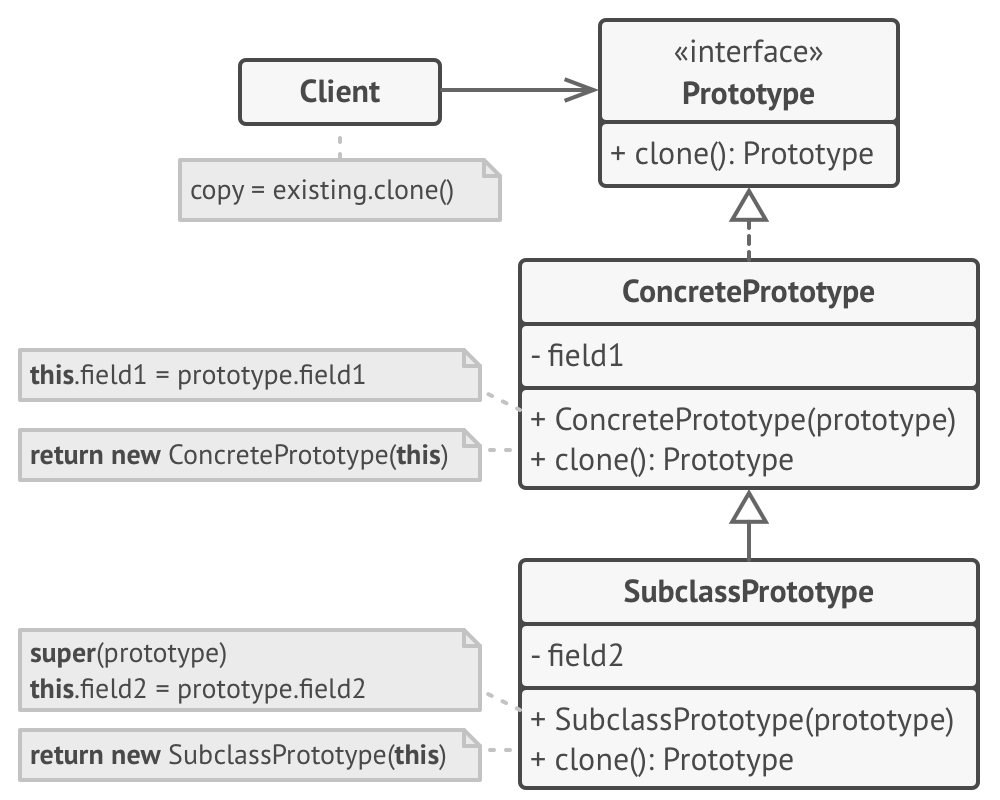
其中几个名次解释如下:
- 原型 (Prototype) 接口将对克隆方法进行声明。 在绝大多数情况下, 其中只会有一个名为 clone克隆的方法。
- ** 具体原型 (Concrete Prototype)** 类将实现克隆方法。 除了将原始对象的数据复制到克隆体中之外, 该方法有时还需处理克隆过程中的极端情况, 例如克隆关联对象和梳理递归依赖等等。
- ** 客户端 (Client)** 可以复制实现了原型接口的任何对象。
原型注册表实现
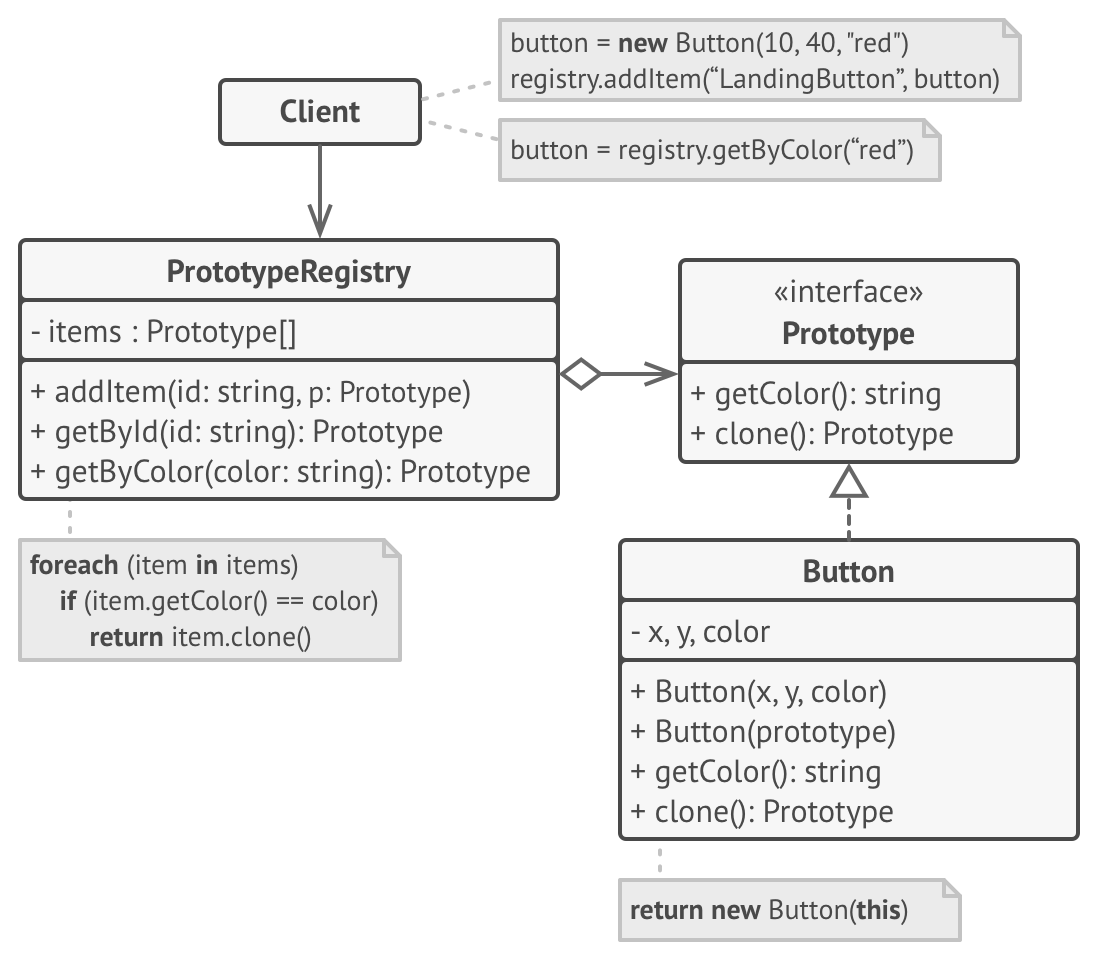
- 原型注册表 (Prototype Registry) 提供了一种访问常用原型的简单方法, 其中存储了一系列可供随时复制的预生成对象。 最简单的注册表原型是一个 名称 → 原型的哈希表。 但如果需要使用名称以外的条件进行搜索, 你可以创建更加完善的注册表版本。
原型模式适合应用场景
- 如果你需要复制一些对象, 同时又希望代码独立于这些对象所属的具体类, 可以使用原型模式。
- 如果子类的区别仅在于其对象的初始化方式, 那么你可以使用该模式来减少子类的数量。 别人创建这些子类的目的可能是为了创建特定类型的对象。
实现方式
- 创建原型接口, 并在其中声明克隆方法。 如果你已有类层次结构, 则只需在其所有类中添加该方法即可。
- 原型类必须另行定义一个以该类对象为参数的构造函数。 构造函数必须复制参数对象中的所有成员变量值到新建实体中。 如果你需要修改子类, 则必须调用父类构造函数, 让父类复制其私有成员变量值。
- 克隆方法通常只有一行代码: 使用new运算符调用原型版本的构造函数。 注意, 每个类都必须显式重写克隆方法并使用自身类名调用new运算符。 否则, 克隆方法可能会生成父类的对象。
- 你还可以创建一个中心化原型注册表, 用于存储常用原型。
你可以新建一个工厂类来实现注册表,或者在原型基类中添加一个获取原型的静态方法。 该方法必须能够根据客户端代码设定的条件进行搜索。 搜索条件可以是简单的字符串, 或者是一组复杂的搜索参数。 找到合适的原型后, 注册表应对原型进行克隆, 并将复制生成的对象返回给客户端。最后还要将对子类构造函数的直接调用替换为对原型注册表工厂方法的调用。`
优缺点
| 优点 | 缺点 |
|---|---|
| 你可以克隆对象, 而无需与它们所属的具体类相耦合。 | 克隆包含循环引用的复杂对象可能会非常麻烦。 |
| 你可以克隆预生成原型, 避免反复运行初始化代码。 | |
| 你可以更方便地生成复杂对象。 | |
| 你可以用继承以外的方式来处理复杂对象的不同配置。 |
与其他模式的关系
- 在许多设计工作的初期都会使用工厂方法模式 (较为简单, 而且可以更方便地通过子类进行定制), 随后演化为使用抽象工厂模式、 原型模式或**生成器模式 **(更灵活但更加复杂)。
- 抽象工厂模式通常基于一组工厂方法, 但你也可以使用原型模式来生成这些类的方法。
- 原型可用于保存命令模式的历史记录。
- 大量使用组合模式和装饰模式的设计通常可从对于原型的使用中获益。 你可以通过该模式来复制复杂结构, 而非从零开始重新构造。
- 原型并不基于继承, 因此没有继承的缺点。 另一方面, 原型需要对被复制对象进行复杂的初始化。 工厂方法基于继承, 但是它不需要初始化步骤。
- 有时候原型可以作为备忘录模式的一个简化版本, 其条件是你需要在历史记录中存储的对象的状态比较简单, 不需要链接其他外部资源, 或者链接可以方便地重建。
- 抽象工厂、 生成器和原型都可以用单例模式来实现。
伪代码
使用示例: Java 的 Cloneable (可克隆) 接口就是立即可用的原型模式。任何类都可通过实现该接口来实现可被克隆的性质。
java.lang.Object#clone() (类必须实现 java.lang.Cloneable 接口)
识别方法: 原型可以简单地通过 clone或 copy等方法来识别。
下面就是一个复制图形的例子
shapes: 形状列表
shapes/Shape.java: 通用形状接口
package refactoring_guru.prototype.example.shapes;

import java.util.Objects;

public abstract class Shape {
    public int x;
    public int y;
    public String color;

    public Shape() {
    }

    public Shape(Shape target) {
        if (target != null) {
            this.x = target.x;
            this.y = target.y;
            this.color = target.color;
        }
    }

    public abstract Shape clone();

    @Override
    public boolean equals(Object object2) {
        if (!(object2 instanceof Shape)) return false;
        Shape shape2 = (Shape) object2;
        return shape2.x == x && shape2.y == y && Objects.equals(shape2.color, color);
    }
}
shapes/Circle.java: 简单形状
 package refactoring_guru.prototype.example.shapes;

public class Circle extends Shape {
    public int radius;

    public Circle() {
    }

    public Circle(Circle target) {
        super(target);
        if (target != null) {
            this.radius = target.radius;
        }
    }

    @Override
    public Shape clone() {
        return new Circle(this);
    }

    @Override
    public boolean equals(Object object2) {
        if (!(object2 instanceof Circle) || !super.equals(object2)) return false;
        Circle shape2 = (Circle) object2;
        return shape2.radius == radius;
    }
}
shapes/Rectangle.java: 另一个形状
  package refactoring_guru.prototype.example.shapes;

public class Rectangle extends Shape {
    public int width;
    public int height;

    public Rectangle() {
    }

    public Rectangle(Rectangle target) {
        super(target);
        if (target != null) {
            this.width = target.width;
            this.height = target.height;
        }
    }

    @Override
    public Shape clone() {
        return new Rectangle(this);
    }

    @Override
    public boolean equals(Object object2) {
        if (!(object2 instanceof Rectangle) || !super.equals(object2)) return false;
        Rectangle shape2 = (Rectangle) object2;
        return shape2.width == width && shape2.height == height;
    }
}
Demo.java: 克隆示例
package refactoring_guru.prototype.example;

import refactoring_guru.prototype.example.shapes.Circle;
import refactoring_guru.prototype.example.shapes.Rectangle;
import refactoring_guru.prototype.example.shapes.Shape;

import java.util.ArrayList;
import java.util.List;

public class Demo {
    public static void main(String[] args) {
        List<Shape> shapes = new ArrayList<>();
        List<Shape> shapesCopy = new ArrayList<>();

        Circle circle = new Circle();
        circle.x = 10;
        circle.y = 20;
        circle.radius = 15;
        circle.color = "red";
        shapes.add(circle);

        Circle anotherCircle = (Circle) circle.clone();
        shapes.add(anotherCircle);

        Rectangle rectangle = new Rectangle();
        rectangle.width = 10;
        rectangle.height = 20;
        rectangle.color = "blue";
        shapes.add(rectangle);

        cloneAndCompare(shapes, shapesCopy);
    }

    private static void cloneAndCompare(List<Shape> shapes, List<Shape> shapesCopy) {
        for (Shape shape : shapes) {
            shapesCopy.add(shape.clone());
        }

        for (int i = 0; i < shapes.size(); i++) {
            if (shapes.get(i) != shapesCopy.get(i)) {
                System.out.println(i + ": Shapes are different objects (yay!)");
                if (shapes.get(i).equals(shapesCopy.get(i))) {
                    System.out.println(i + ": And they are identical (yay!)");
                } else {
                    System.out.println(i + ": But they are not identical (booo!)");
                }
            } else {
                System.out.println(i + ": Shape objects are the same (booo!)");
            }
        }
    }
}
OutputDemo.txt: 执行结果
0: Shapes are different objects (yay!)
0: And they are identical (yay!)
1: Shapes are different objects (yay!)
1: And they are identical (yay!)
2: Shapes are different objects (yay!)
2: And they are identical (yay!)
原型注册站
你可以实现中心化的原型注册站 (或工厂), 其中包含一系列预定义的原型对象。 这样一来, 你就可以通过传递对象名称或其他参数的方式从工厂处获得新的对象。 工厂将搜索合适的原型, 然后对其进行克隆复制, 最后将副本返回给你。
cache
cache/BundledShapeCache.java: 原型工厂
package refactoring_guru.prototype.caching.cache;

import refactoring_guru.prototype.example.shapes.Circle;
import refactoring_guru.prototype.example.shapes.Rectangle;
import refactoring_guru.prototype.example.shapes.Shape;

import java.util.HashMap;
import java.util.Map;

public class BundledShapeCache {
    private Map<String, Shape> cache = new HashMap<>();

    public BundledShapeCache() {
        Circle circle = new Circle();
        circle.x = 5;
        circle.y = 7;
        circle.radius = 45;
        circle.color = "Green";

        Rectangle rectangle = new Rectangle();
        rectangle.x = 6;
        rectangle.y = 9;
        rectangle.width = 8;
        rectangle.height = 10;
        rectangle.color = "Blue";

        cache.put("Big green circle", circle);
        cache.put("Medium blue rectangle", rectangle);
    }

    public Shape put(String key, Shape shape) {
        cache.put(key, shape);
        return shape;
    }

    public Shape get(String key) {
        return cache.get(key).clone();
    }
}
Demo.java: 克隆示例
package refactoring_guru.prototype.caching;

import refactoring_guru.prototype.caching.cache.BundledShapeCache;
import refactoring_guru.prototype.example.shapes.Shape;

public class Demo {
    public static void main(String[] args) {
        BundledShapeCache cache = new BundledShapeCache();

        Shape shape1 = cache.get("Big green circle");
        Shape shape2 = cache.get("Medium blue rectangle");
        Shape shape3 = cache.get("Medium blue rectangle");

        if (shape1 != shape2 && !shape1.equals(shape2)) {
            System.out.println("Big green circle != Medium blue rectangle (yay!)");
        } else {
            System.out.println("Big green circle == Medium blue rectangle (booo!)");
        }

        if (shape2 != shape3) {
            System.out.println("Medium blue rectangles are two different objects (yay!)");
            if (shape2.equals(shape3)) {
                System.out.println("And they are identical (yay!)");
            } else {
                System.out.println("But they are not identical (booo!)");
            }
        } else {
            System.out.println("Rectangle objects are the same (booo!)");
        }
    }
}
OutputDemo.txt: 执行结果
Big green circle != Medium blue rectangle (yay!)
Medium blue rectangles are two different objects (yay!)
And they are identical (yay!)